Cross-Border DPI in the East African Community (EAC)
Disclaimer: This subchapter draws on key findings and insights from the recently published (October 2025) “EAC Digital Public Infrastructure (DPI) Needs Assessment Report”. For detailed analysis, underlying evidence, and full references, please refer to the original report.
Why Cross-Border DPI Matters for the EAC
The EAC Context: Regional Integration with Uneven Digital Maturity
The East African Community (EAC) aims to develop deep regional integration through its Common Market and Monetary Union ambitions. Digital Public Infrastructure (DPI) is increasingly regarded as a practical mechanism in order to operationalize these commitments by enabling the seamless movement of people, services, capital, and data across borders. However, it is emphasized, that the EAC operates in an environment categorized by highly uneven digital maturity among its partner states. In fact, Kenya, Rwanda, Tanzania, and Uganda have established relatively advanced digital payment systems, e-government platforms, and foundational registries, while Burundi, the Democratic Republic of Congo (DRC), Somalia, and South Sudan are still developing core digital as well as institutional foundations.
This asymmetry forms a structural challenge: Purely national DPI strategies risk deepening fragmentation, while cross-border DPI offers a pathway for joint progress despite unequal starting points. Thus, as indicated in the EAC report, through enabling interoperability rather than uniformity, cross-border DPI permits less digitally advanced countries to connect to shared regional rails (particularly in payments and data exchange) without necessarily requiring full national system maturity upfront. In this sense, DPI operates as an integration accelerator rather than a prerequisite outcome.
The EAC’s DPI + approach
The EAC “Needs Assessment Report” recommends the EAC to adopt a DPI+ approach, which extends beyond the three classical DPI components (digital identity, digital payments, and data exchange) to include infrastructure connectivity, digital skills, and digital literacy as integral components. This approach reflects regional realities: Persistent connectivity gaps, uneven digital literacy, and limited institutional capacity constrain the effectiveness of DPI if treated as a purely technical infrastructure.
Hence, the DPI+ approach places DPI not as a set of standalone IT systems, but as a socio-technical foundation for inclusive regional development. More specifically, regional initiatives such as the Eastern Africa Regional Digital Integration Project (EARDIP) reinforce this logic through combining infrastructure investments with regulatory harmonization and institutional capacity building. Furthermore, the DPI+ framing closely aligns with the GovStack principles, particularly the emphasis on modularity, interoperability, and reuse across heterogeneous contexts.

Strategic Benefits of Cross-Border DPI in the EAC
Building on the above-mentioned context, this section outlines the concrete strategic benefits of cross-border DPI for the EAC, highlighting how shared digital foundations can translate regional ambitions into concrete economic, institutional, and social gains.
Economic Integration and Trade Facilitation
According to the EAC report, cross-border DPI is identified as a key enabler for reducing friction and increasing intra-regional commerce by enabling interoperable payments and shared data exchange. In fact, it is emphasized that these mechanisms lower transaction costs, shorten settlement times, and reduce reliance on extra-regional intermediaries.
For example, the East African Payments System (EAPS) boosts regional financial integration by enabling direct cross-border settlement between national banking systems, while the Trade Logistics Information Pipeline (TLIP) is reported to have improved trade facilitation through secure data exchange among customs and logistics authorities. Together, these initiatives are assessed as enhancing coordination, supporting smoother movement of goods and capital, and contributing to a more integrated regional trading environment. In doing so, cross-border DPI strengthens regional value chains and positions the EAC as a practical implementation layer of the African Continental Free Trade Area Agreement (AfCFTA) and the AfCFTA Digital Trade Protocol.
Mobility of People, Skills, and Services
Cross-border DPI is reported to facilitate the mobility of people, skills, and services within the EAC by offering trusted mechanisms for identification and data exchange across borders (e.g. national digital identity systems and interoperable population and civil registration databases). While the EAC Common Market establishes legal rights to free movement, fragmented systems and manual verification continue to limit practical implementation (e.g. country-specific identity checks and paper-based processes). Hence, for the future, interoperable and federated digital identity systems can reduce these barriers by enabling secure cross-border identification while reserving national sovereignty (for instance, throughmutual recognition arrangements rather than supranational IDs).
Beyond identity, cross-border DPI can assist the operationalisation of Mutual Recognition Arrangements (MRAs) and regional mobility frameworks just as the Common Higher Education Area (CHEA) and the East African Qualifications Framework for Higher Education (EAQFHE) through enabling digital verification of qualifications, credentials, and entitlements (e.g. academic records, professional certifications, and eligibility registries). Thus, through strengthening trust and mutual recognition among Partner States, cross-border DPI supports the practical implementation of free movement of people, skills as well as services within the EAC.
Government Effectiveness at Regional Scale
Cross-border DPI is also assessed to boosts government effectiveness at regional scale by facilitating coordination, information sharing, and operational alignment among EAC Partner States. While public service delivery and regulatory authority remain primarily national, interoperable DPI reduces duplication, increases consistency of cross-border processes, and improves the execution of regional mandates. By providing shared digital rails, cross-border DPI allows public institutions to coordinate more efficiently across jurisdictions while preserving national sovereignty (e.g. interbank settlement via the East African Payments System (EAPS); as well as customs and trade data coordination through the Trade Logistics Information Pipeline (TLIP)).
In addition, cross-border DPI is reported to boost regional governance by enhancing collective monitoring and response capacities in priority policy areas. In fact, regional health surveillance can be highlighted as a key example, where interoperable systems can support early warning, information sharing, and coordinated action across Partner States (e.g. East African Integrated Disease Surveillance Network (EAIDSNet)). Taken together, these examples demonstrate how cross-border DPI boosts administrative efficiency and policy coherence at regional level without requiring centralisation of authority.
Inclusion, Resilience, and Trust
Across the East African Community, it is highlighted that inclusion, resilience, and trust remain uneven due to fragmented national systems, disparities in connectivity and digital literacy, and varying levels of institutional capacity. Mobile populations, border communities, refugees, and informal workers often face inconsistent access to public and financial services when moving across borders, while cross-border risks such as disease outbreaks, migration pressures, and supply chain disruptions expose limits in coordination and collective response. At the same time, concerns around data protection, cybersecurity, and the use of digital identity continue to shape public trust in digital systems.
Cross-border Digital Public Infrastructure (DPI) is thus relevant in this context because it offers a structured way to address these challenges through interoperable, sovereignty-preserving systems (e.g. through cross-border mobile money). By enabling trusted cross-border identification, coordinated service provision, and shared regional capabilities, cross-border DPI can lower administrative barriers for underserved groups, support continuity of services for mobile populations, and strengthen regional resilience to shocks. When complemented by privacy-by-design, robust governance frameworks, and clear accountability mechanisms, cross-border DPI can also help build and sustain trust, ensuring that inclusion and resilience gains are both effective and durable.
Best-Practice Examples from the EAC Region
These strategic benefits are already emerging in practice across the EAC, as illustrated by a set of concrete cross-border DPI initiatives highlighted in this section:
Best Practice 1: East African Payments Systems (EAPS)
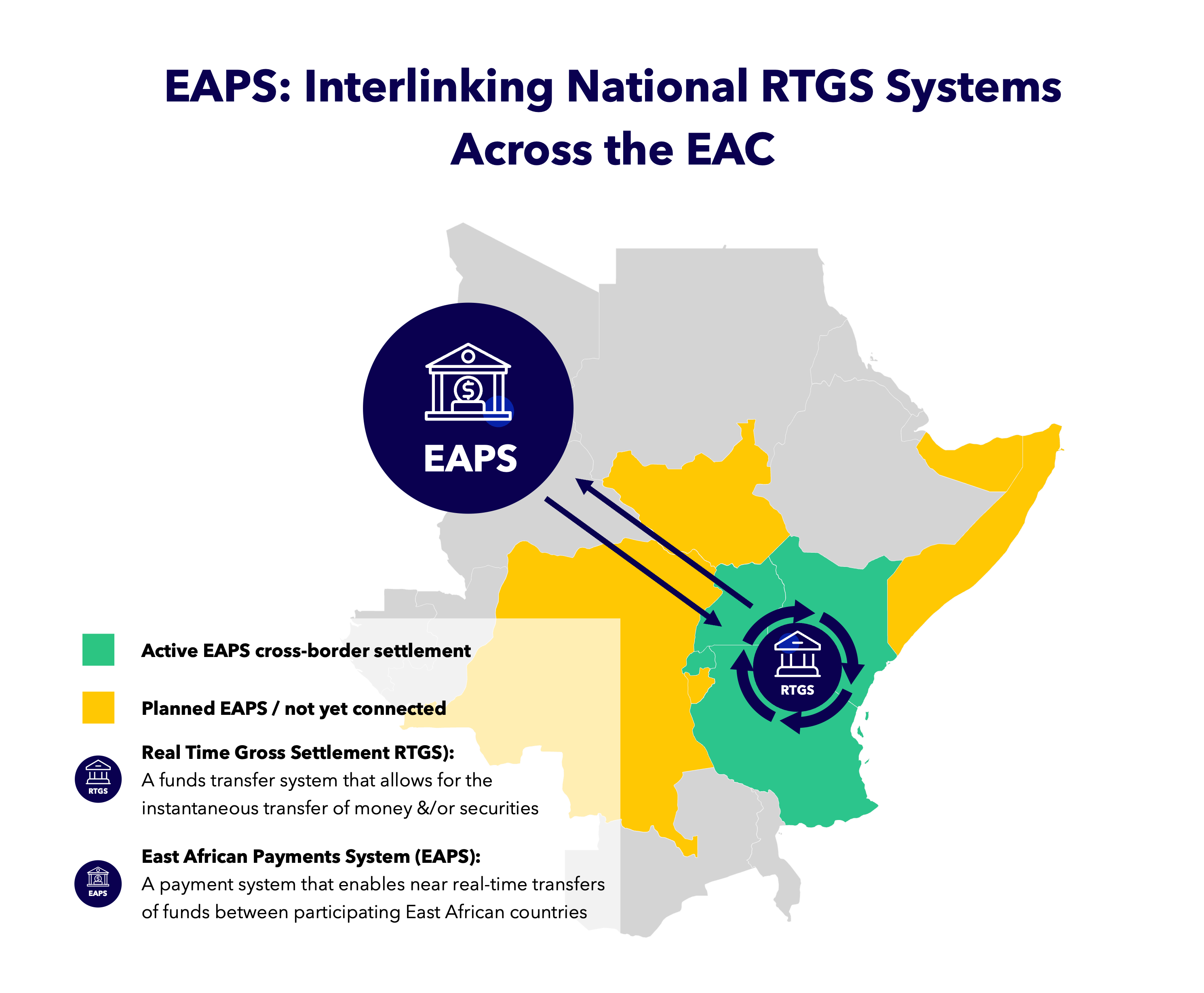
The East African Payments System (EAPS) is a foundational cross-border payments infrastructure established by EAC central banks in order to address inefficiencies in intra-regional trade and financial flows. By interlinking national real-time gross settlement (RTGS) systems, EAPS enables direct interbank settlement across Partner States, decreasing the reliance on foreign correspondent banks and external currencies. This improves regional economic sovereignty and supports high-value trade, government payments, as well as formal cross-border financial transactions while preserving national control over monetary policy and supervision.
At the same time, EAPS illustrates key limitations of foundational DPI. In fact, uptake has been uneven across the region (only adopted in Kenya, Tanzania, Uganda, and Rwanda (as of 2025)), and the system primarily serves wholesale, bank-to-bank payments, excluding retail users and low-value transactions. These constraints have led to continued reliance on alternative payment corridors and highlight the need for complementary reforms. However, ongoing efforts under the EAC Cross-Border Payments Masterplan aim to modernise EAPS and extend its impact through technical upgrades, governance reforms, and the introduction of retail and low-value payment layers, demonstrating how foundational DPI must evolve to deliver broader regional benefits.

Best Practice 2: Cross-Border Mobile Money Interoperability
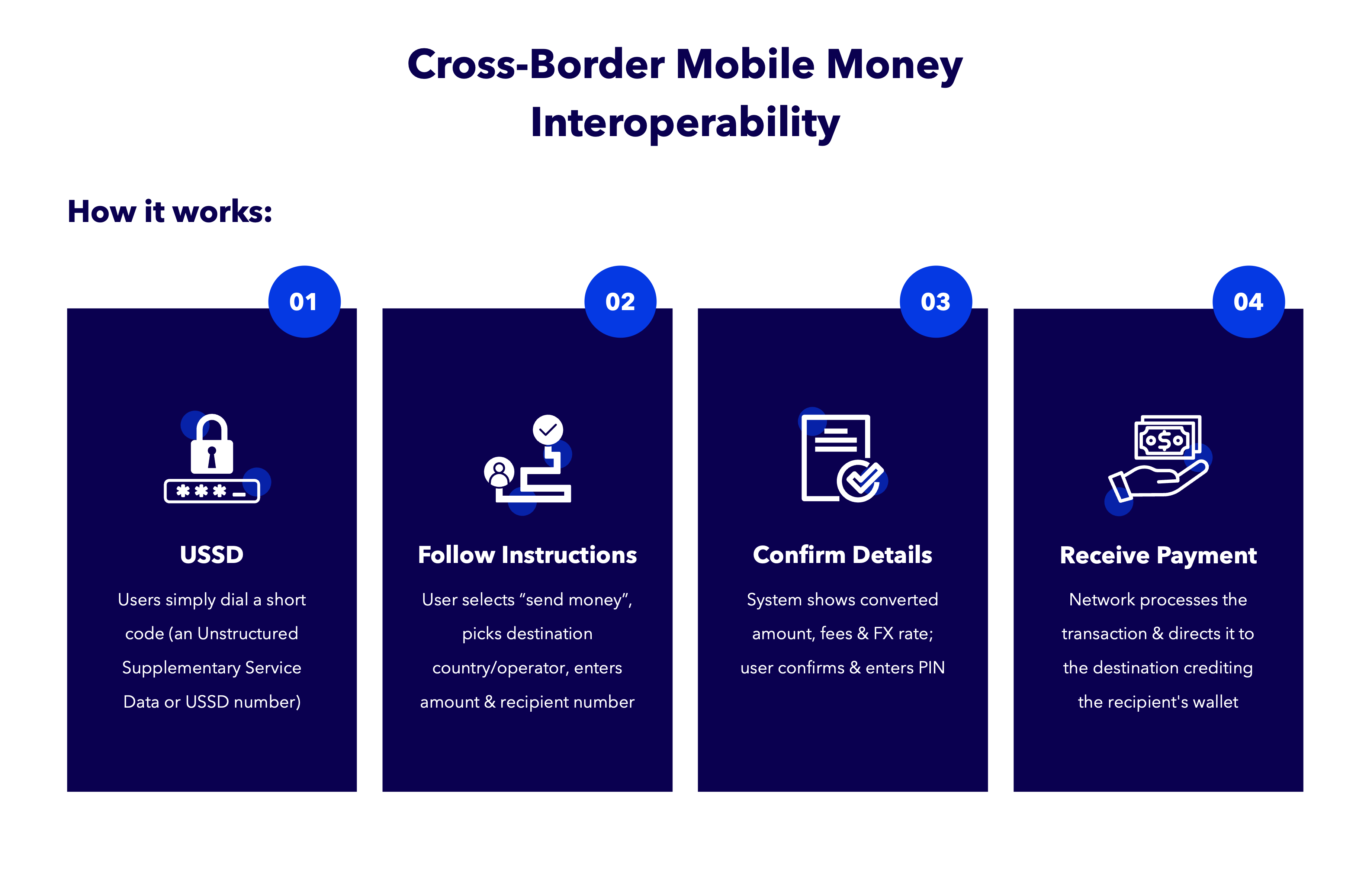
Cross-border mobile money can be highlighted as one of the most mature and widely used regional payment mechanisms in the EAC, enabled by high mobile penetration, extensive agent networks, and simple USSD-based services. Through bilateral and multilateral agreements, mobile money operators such as M-Pesa, MTN MoMo, Airtel Money, Tigo and Vodacom have enabled real-time wallet-to-wallet transfers across key corridors including Kenya-Tanzania, Kenya-Uganda, Kenya-Rwanda and Uganda-Tanzania (most active ones). These services are widely utilized for remittances, informal trade and personal transfers, particularly by unbanked users, women and rural populations, supporting intra-regional trade and AfCFTAobjectives.
It is emphasized, that at scale, mobile money has significantly advanced financial inclusion and payment resilience in East Africa, with an estimated $649 billion transacted across roughly 459 million accounts in 2024. Governments increasingly use mobile money for G2P (government to person) payments and P2G (peer-to-government) collections, embedding it in the formal economy. However, cross-border fees remain high in some corridors, interoperability relies largely on private agreements, and regional oversight is still fragmented. The EAC Cross-Border Payments Masterplan thus aims to address these gaps, positioning cross-border mobile money as a scalable DPI layer that complements wholesale systems such as EAPS (s.o. Best Practice 1: East African Payment Systems) while extending regional payments to low-value, high-volume use cases.

Best Practice 3: Trade Logistics Information Pipeline (TLIP)
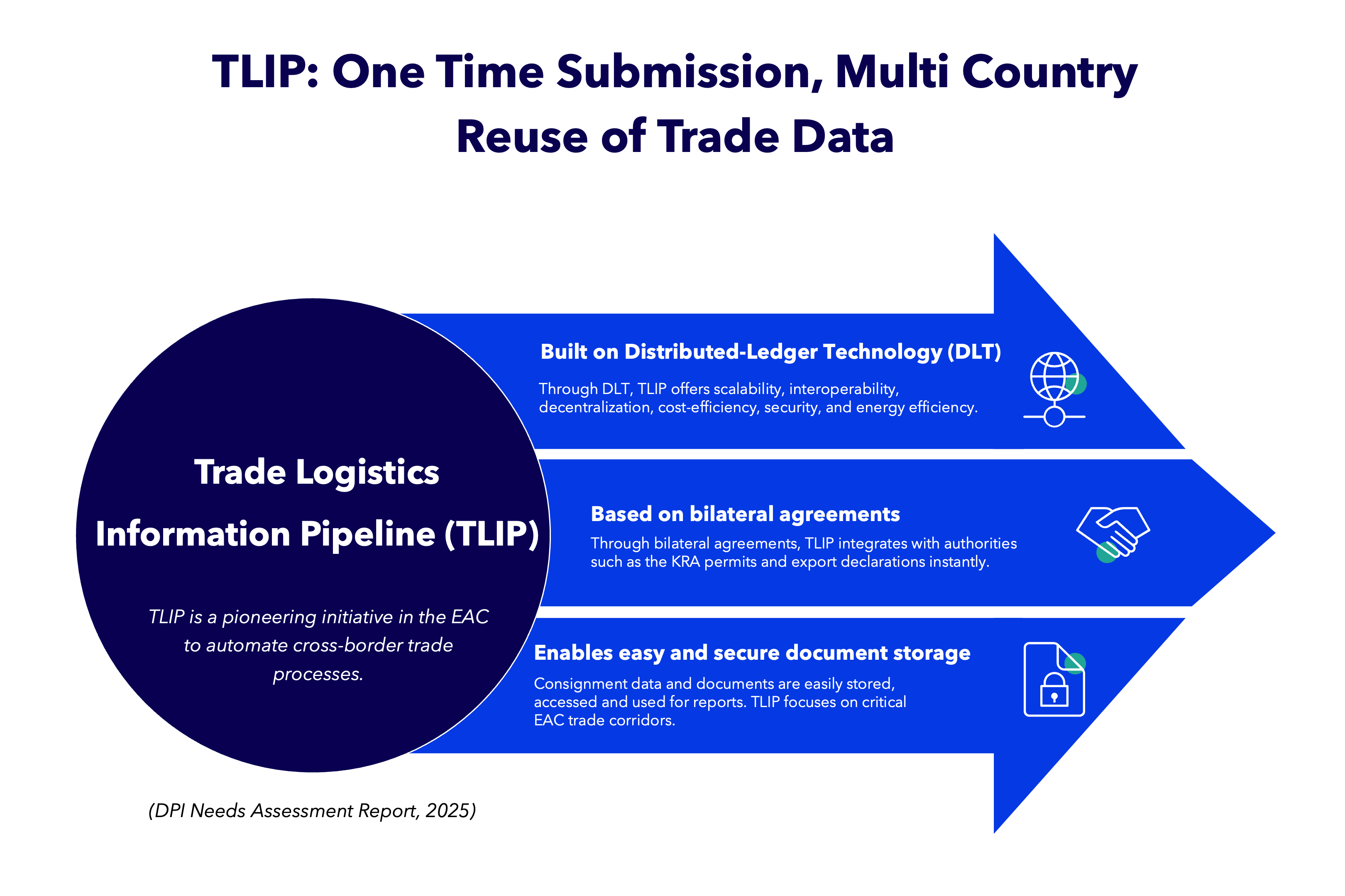
The Trade Logistics Information Pipeline, TLIP, is a regional digital system aimed at automating and connecting cross-border trade processes in the East African Community. It enables the secure, near real time exchange of trade, logistics and regulatory data between traders, logistics providers and public authorities. TLIP connects national Electronic Single Windows and customs systems, allowing documents such as permits, certificates and cargo information to be submitted once and reused across borders, decreasing duplication, delays and manual processing.
TLIP is implemented along key EAC trade corridors, including the Northern and Central Corridors, and supports coordination under the Single Customs Territory, the Regional Electronic Cargo Tracking System and the SPS Information Pipeline for sanitary and phytosanitary data. While TLIP has improved transparency, clearance times and trade efficiency, its regional impact remains constrained by the absence of a harmonised EAC wide data exchange and governance framework. Hence, without common standards for data sharing, access and oversight, interoperability remains uneven and limits TLIP's ability to scale as a core cross border Digital Public Infrastructure for regional trade.

Best Practice 4: Mutual Recognition of Professional Qualifications (MRPQ)
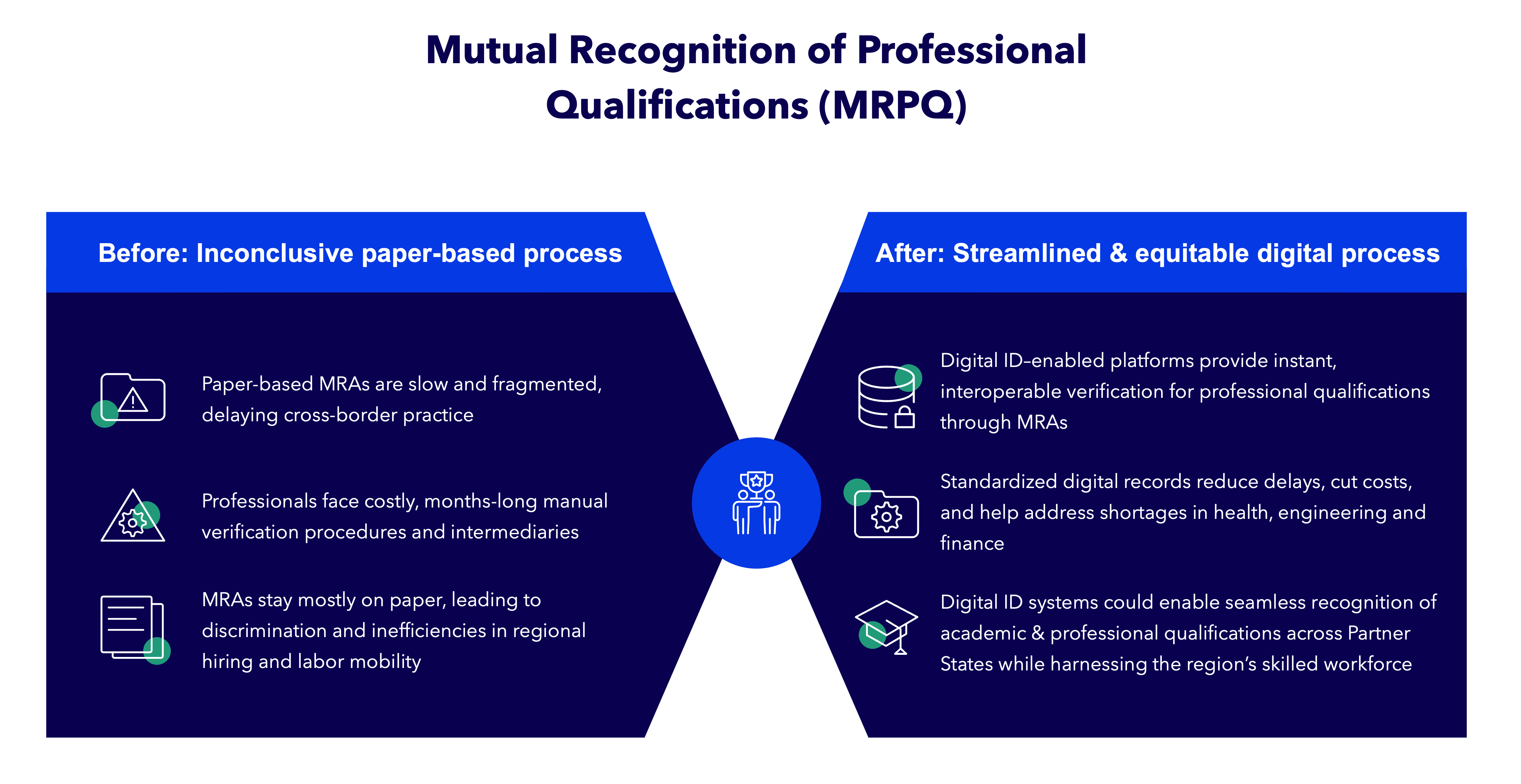
The EAC Common Market Protocol recognizes Mutual Recognition Agreements (MRAs) as the legal basis for cross-border practice in regulated professions such as accountancy, engineering, architecture, and veterinary medicine. In practice, however, recognition remains slow and fragmented, relying on manual, paper-based verification across national professional bodies. This thus can lead to delays of months or years, increase costs, as well as weaken labor mobility and service trade within the Common Market. Furthermore, recent assessments also highlight the absence of standardized, interoperable verification mechanisms among regulators, limiting the effective implementation of MRAs despite strong legal foundations.
However, digital public infrastructure can address these constraints through enabling secure, cross-border verification of professional credentials directly between national registries. TheDigitalisation for East African Trade and Integration (DIGEAT) pilot demonstrates this approach by connecting engineering regulators across Kenya, Uganda, Tanzania, Rwanda, and South Sudan through a shared data-exchange mechanism connected to national systems. Moreover, through digitizing records, standardizing data formats, and enabling trusted queries, MRPQ systems can reduce fraud, curb rent-seeking, and accelerate skills mobility while preserving regulatory authority at national level. Scaling this model across professions, aligned with the EAC Strategy for Trade in Services and AfCFTA, would improve labor market integration, help tackle regional skills shortages, and translate MRAs from formal commitments into operational reality.

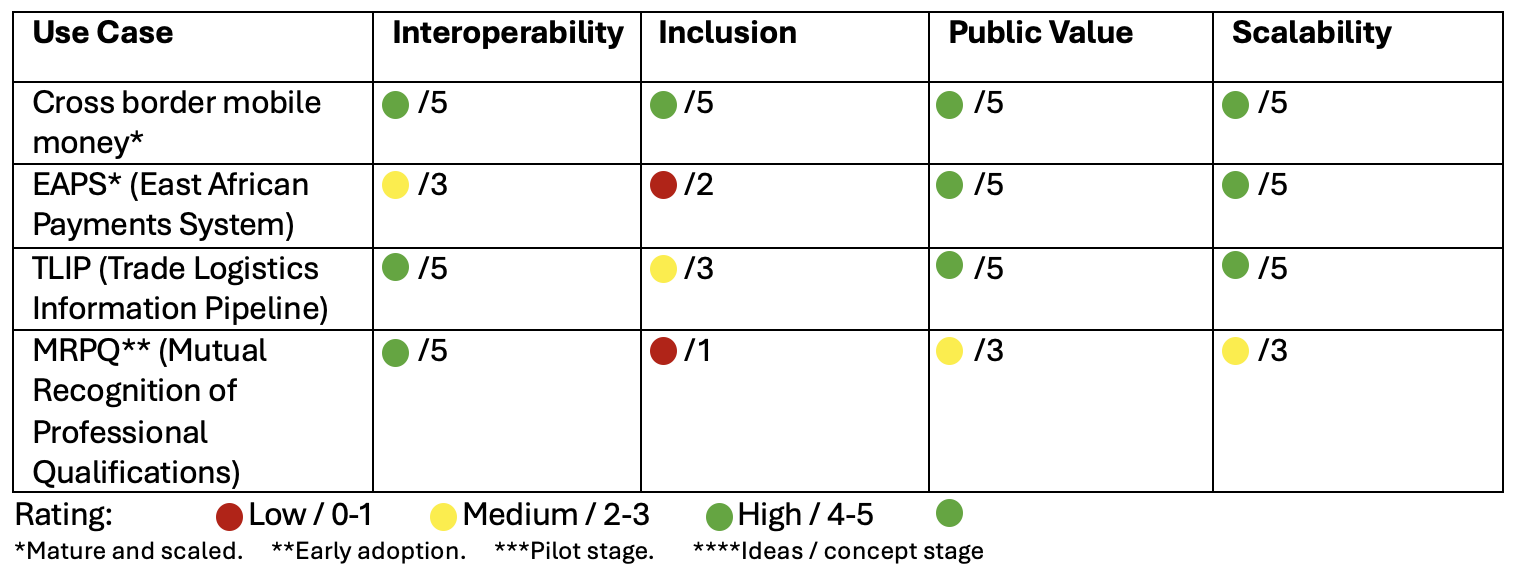
Finally, the comparative overview below synthesizes the preceding best-practice examples by assessing their current performance across interoperability, inclusion, public value, and scalability. Based on an analytical framework developed by ECDPM authors, it highlights relative maturity levels and remaining structural gaps, providing a consolidated view of where cross-border DPI in the EAC is most advanced and where further coordination is required.

Roadmap for the East Africa Stack: Policy Options and Recommendations
Taken together, the above-mentioned best-practice examples highlight both the progress achieved, as well as the structural gaps that remain in the cross-border DPI implementation across the EAC. It thus underscores the need for a targeted roadmap of policy options and recommendations to fully realize its value at scale:
First, the EAC should implement cross-border DPI as a socio-technical system (DPI+) that combines infrastructure, policy, skills, and institutional capacity, reflecting uneven digital maturity across Partner States.
Second, it is also necessary to position DPI as core public infrastructure that enables multiple cross-border services and requires long-term public investment and regional coordination.
Third, DPI must be complemented by regulatory harmonization, governance safeguards, and capacity building to avoid reinforcing fragmentation.
Fourth, the EAC must strengthen regional connectivity and data infrastructure by investing in fiber, satellite connectivity, and regional data centers. These investments are essential to ensure equitable access, data sovereignty, and scalability of DPI services across all Partner States.
Fifth, the region should develop enabling policy and regulatory frameworks. This includes adopting a regional interoperability and open standards policy, establishing a regional DPI Blueprint aligned with AU and AfCFTA frameworks, strengthening data protection and cybersecurity regimes, and ensuring alignment between national and regional DPI strategies.
Sixth, private-sector participation and innovation must be actively supported through public–private partnerships (PPPs), regulatory sandboxes, and support for local digital ecosystems. Fintech licensing passports and regional sandboxes can reduce regulatory fragmentation and accelerate cross-border services.
Seventh, the EAC should establish strong regional and national leadership on DPI, including global standards (e.g. GovStack PAERA) when designing enterprise architecture, a dedicated regional DPI coordination function, national inter-ministerial task forces, and a regional DPI working group involving governments, regulators, private sector actors, and civil society.
Finally, the sustainability of the East Africa Stack depends on long-term financing, skills development, monitoring mechanisms, and civil society engagement. Embedding DPI safeguards, tracking impact through shared indicators, and investing in public-sector digital capabilities are critical to maintaining trust and resilience over time.
Last updated
Was this helpful?